Concept Mapping That Supercharges Learning and Memory

Today we dive into concept mapping to boost learning and memory, turning scattered facts into linked ideas that your brain can actually keep. You will learn how to build meaningful connections, label relationships clearly, and practice retrieval using evolving diagrams that grow with you. Expect practical steps, motivating stories, and evidence-backed tactics you can try immediately across classes, projects, or lifelong learning pursuits. Share your experiments and subscribe for deeper challenges.

From Scattershot Notes to Coherent Insight
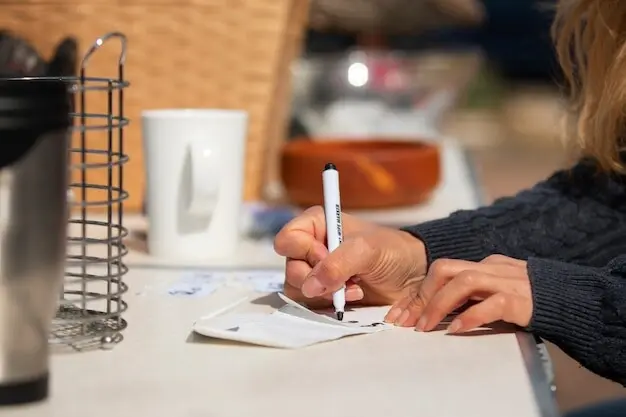
When information arrives faster than your pen, it feels impossible to keep track. By clustering ideas around guiding questions and drawing expressive links, you transform piles of notes into an explorable map that reveals structure, gaps, and leverage points. A student once recovered a failing grade simply by redrawing biology chapters weekly, discovering misconceptions early and rehearsing stronger cues. You can do the same starting today.

Memory Pathways Built for Retrieval

Memorable learning depends on cue-rich structures. By naming relationships explicitly—such as causes, prerequisites, mechanisms, and consequences—you generate prompts your future self can recognize quickly. Combining these maps with spaced repetition transforms review from passive rereading into active reconstruction. With each pass, you compress clutter, strengthen key links, and create distinctive anchors that resist interference during high-pressure moments.
Attach concepts to concrete examples, analogies, and counterexamples directly on the diagram. If osmosis equals water moving down a gradient, sketch a membrane and annotate what changes when solute concentration flips. Rich encoding multiplies accessible cues and prevents brittle, context-free definitions from evaporating when conditions change.
Short link phrases outperform decorative arrows. Write because, leads to, requires, contrasts with, and exemplifies. During review, cover parts of the map and predict hidden nodes from visible cues, then check accuracy. This habit strengthens forward and backward associations, creating reliable two-way paths for recall under pressure.

Nodes that Tell a Story

Title each node with a concept and a meaningful qualifier, not a vague label. Instead of Memory, try Episodic memory stores personal experiences, distinct from semantic memory. When nodes carry substance, the map reads like sentences, enabling quick rehearsal that compresses chapters into understandable, conversational statements.

Links that Say Because

Every arrow should answer how or why. Replace bare lines with active connections like regulates, decomposes, predicts, or depends on. Reading the map aloud as a chain of because-statements reveals weak logic instantly and inspires tighter explanations that stick far better than color-coding or decorative icons ever could.

Biology and Processes

Map flows like cellular respiration by tracing inputs, transformations, and outputs, then flagging control points such as enzyme regulation. Add disruptions like poisons or temperature shifts to reveal robustness. When assessment arrives, you can reconstruct pathways quickly and explain consequences of alterations rather than memorizing isolated steps.

History and Causality

Arrange events under forces such as economics, ideology, leadership, and geography. Label links with catalyzes, restrains, or legitimizes to capture dynamics beyond chronology. Cross-link opposing perspectives to avoid one-sided conclusions. This structure helps you argue positions thoughtfully, cite sources precisely, and anticipate counterarguments before debates even begin.

Problem-Solving and Procedures

For mathematics, programming, or lab techniques, map decision trees, constraints, and error signals. Show how feedback determines next steps and what conditions terminate the process. Practice by solving from the map, then re-deriving the map from a fresh problem, so understanding transfers to novel situations confidently.

Digital Workflows Without Friction

Paper is fantastic for thinking, yet digital tools add speed, links, and search. Build a lightweight workflow: capture drafts anywhere, refine on a larger canvas, and archive versions for reflection. Export snapshots into spaced-repetition cards or outlines. The result is a living system where learning compounds and revision feels genuinely satisfying.

Capture on the Go

Use your phone to sketch quick nodes after lectures, meetings, or reading sessions. Tag with course, project, or date, then sync to a desktop canvas for reorganization. Tiny, low-friction captures prevent forgetting and seed richer maps that blossom during deliberate weekly studio time.

Versioning and Growth

Save dated iterations so you can compare how explanations evolve. Growth becomes visible when bloated sections shrink, cross-links multiply, and central statements sharpen. Reviewing these timelines builds metacognition, revealing which habits create breakthroughs and which distractions merely decorate without improving performance when tested cold.

Integrate with Notes and Flashcards

Link map nodes to detailed notes, sources, or problem sets, then convert key links into cloze deletions or targeted prompts. Alternating between active recall and redrawing keeps cues fresh. When a card fails, revisit the map to fortify context rather than memorizing trivia in isolation.

Collaboration, Teaching, and Assessment

Shared maps expose assumptions kindly and quickly. In workshops or classrooms, participants coalesce around visible relationships, noticing contradictions and missing steps sooner. Teachers can model construction live, narrating choices and mistakes to demystify expertise. Assessment shifts from counting facts to evaluating coherence, justification, and transfer, encouraging deeper study habits and reflective conversation.
Davolumaloro
Privacy Overview

This website uses cookies so that we can provide you with the best user experience possible. Cookie information is stored in your browser and performs functions such as recognising you when you return to our website and helping our team to understand which sections of the website you find most interesting and useful.